Published By BHF | August 2, 2026
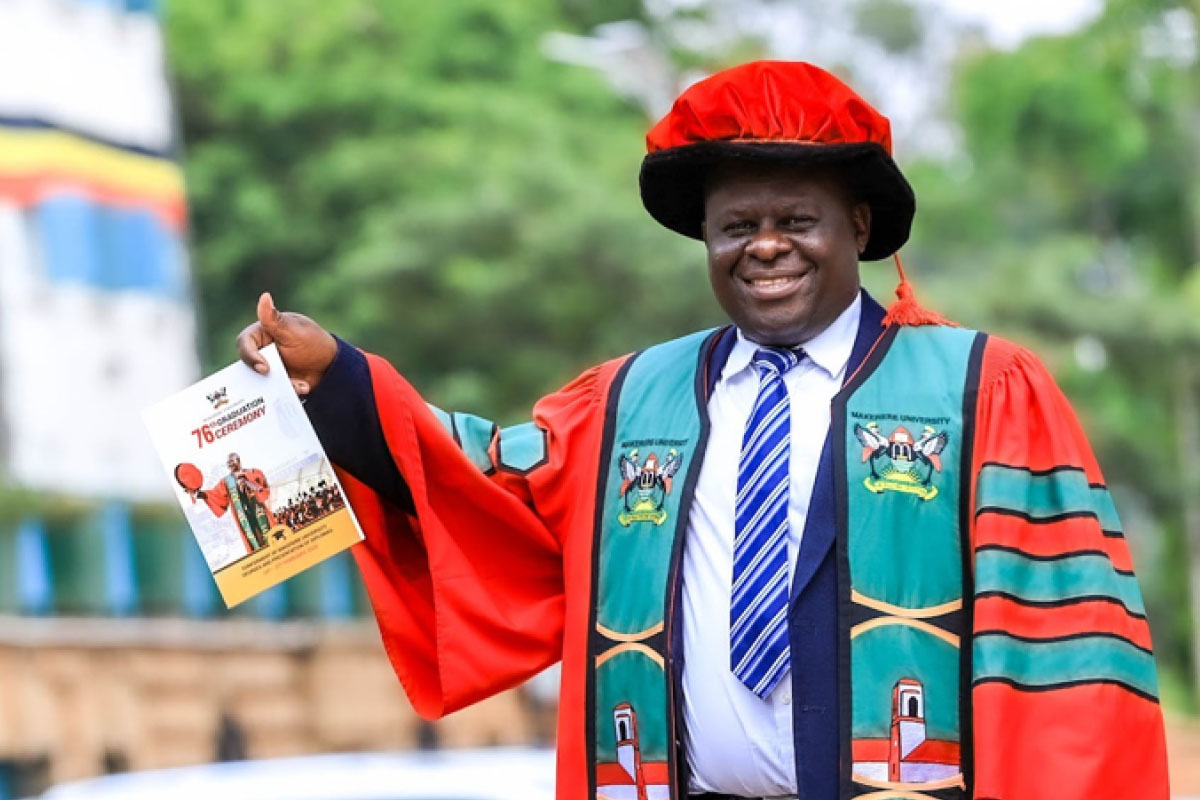
Professor Peter Kyobe Waiswa’s journey of service, institution-building and systems change
Why his promotion to Full Professor was due
| On 10 July 2026, Makerere University promoted Peter Kyobe Waiswa to Full Professor of Health Policy, Planning and Management. The promotion recognised a scholar whose influence has grown from a rural village in Luuka to African research networks and international health-policy platforms – while remaining rooted in community service across Busoga. |
By Tatumwa Desmond Benjamin | Busoga Health Forum | August 2026
A promotion that formalised a long record of impact
On 10 July 2026, during its 811th meeting, the Makerere University Appointments Board promoted Prof. Peter Kyobe Waiswa from Associate Professor to Full Professor of Health Policy, Planning and Management at the Makerere University School of Public Health. The University described the decision as recognition of his sustained contributions to teaching, research and innovation, mentorship, institutional development, leadership and service to society.[1]
The title matters, but the story behind it matters more. Prof. Waiswa’s career has never been confined to lecture rooms, journal articles or conference platforms. It has consistently moved between the village, the health centre, the district, the university, the national policy table and the international stage. His promotion therefore recognised not only academic seniority, but a model of scholarship in which knowledge is expected to serve people.
| “Professional expertise becomes transformative when it is deliberately placed at the service of people.” A principle reflected throughout Prof. Waiswa’s community and academic journey |
The first blackboard: Naigobya as origin and responsibility
Prof. Waiswa was born and raised in Naigobya Village, Bukooma Sub-county, in present-day Luuka District. It was in this rural community that he first saw a blackboard when he began attending school. That modest beginning became more than a biographical detail. Naigobya exposed him early to the realities that shape life in underserved communities: limited access to health services, preventable illness, constrained educational opportunity and the distance between public policy and everyday experience.
His growth has therefore not been a story of leaving the village behind. It has been a story of carrying the village into every level of his work. The questions that later defined his research, why mothers and newborns die, why proven interventions fail to reach families, and how health systems can become more equitable, were rooted in the realities of communities like Naigobya.
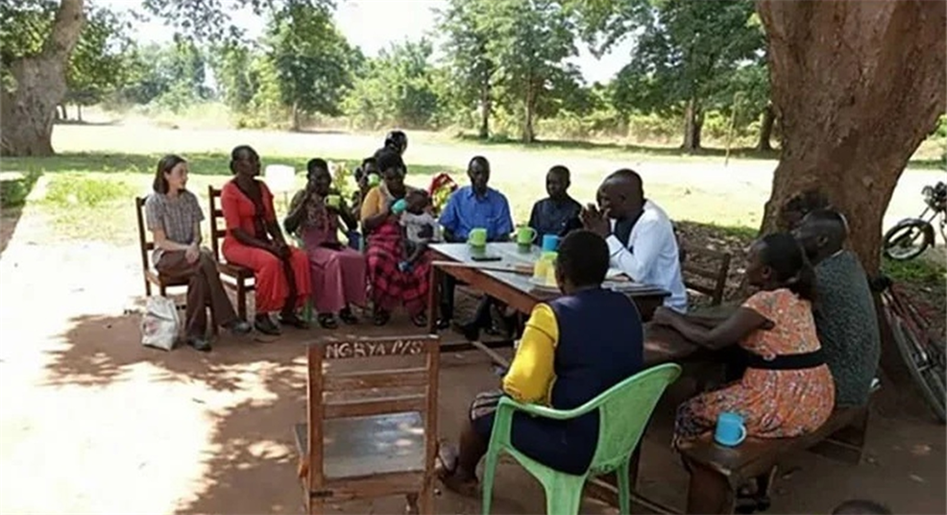
Community dialogue in Naigobya, Luuka District. International practicum engagement continues the cross-cultural learning model that grew through UDHA’s partnerships. Photo: One Village at a Time.
From medicine to health systems
Prof. Waiswa trained as a medical doctor at Mbarara University of Science and Technology. He later completed a Master of Public Health at the Hebrew University of Jerusalem and a joint doctoral programme through Makerere University and Karolinska Institutet in Sweden, followed by postdoctoral training in health systems and policy.[2]
He also served in Uganda’s public health system, including work in the Iganga district health services. This experience helped him understand that better outcomes depend on more than clinical skill. They depend on financing, leadership, staffing, referral pathways, information systems, community trust and the ability to translate policy into reliable care.
The UDHA days: starting local and building trust
Long before his promotion to Full Professor, Prof. Waiswa helped create Uganda Development and Health Associates (UDHA), a grassroots organisation founded in Iganga in 2003 and formally registered as a non-governmental organisation in 2005. UDHA was built around a simple conviction: local problems require locally owned solutions, strengthened by professional expertise and carefully chosen partnerships.[3][4][5]
UDHA’s early work addressed the priorities communities were living with every day. Its programmes included youth-friendly health services, sexual and reproductive health, maternal and child health, immunisation, nutrition, food security, HIV prevention, community counselling and referral. By 2015, its activities reached communities in Iganga, Mayuge, Luuka, Kaliro and Namutumba.[5]
| 2003 UDHA begins in Iganga | 2005 Registered as an NGO | 2014 Integrated HIV, youth and maternal-child health | 2015 Health centres, volunteers and multi-district reach | 2016 Systems strengthening through major partnerships |
The importance of UDHA was not only the services it delivered. It built local structures: community health workers, peer educators, youth platforms, referral networks, monitoring systems and relationships with district health teams. It demonstrated that a small regional organisation could grow into a credible delivery platform without losing community ownership.
Naigobya Health Centre III: service close to home
One of the most visible expressions of this commitment was Naigobya UDHA Health Centre III. The facility brought primary health services closer to a rural community that had long faced barriers to care. UDHA reports describe maternal and child-health activities linked to Naigobya, including antenatal engagement, nutrition education, immunisation, deworming, Vitamin A supplementation and community outreach.[6]
The health centre represented a practical form of institution-building. It was not an isolated charity activity, but part of a wider effort to connect households, community health workers, local government and formal health services. It also gave Naigobya a place within a wider network of learning and partnership.
USA volunteers in the field: global partnership under local leadership
UDHA’s partnership with GlobeMed at Washington University in St. Louis brought American students and other international volunteers into field-based learning and service in Eastern Uganda. The volunteers participated in internships, community engagement, youth initiatives and shared learning with local staff and residents. The partnership widened the circle of expertise and resources, but the programmes remained grounded in UDHA’s local leadership and community priorities.[7]
That distinction is important. International partnership is most useful when it strengthens local institutions rather than replacing them. The UDHA–Washington University relationship became an early example of how cross-cultural collaboration can support community action, mentorship and mutual learning while keeping decision-making close to the people affected.
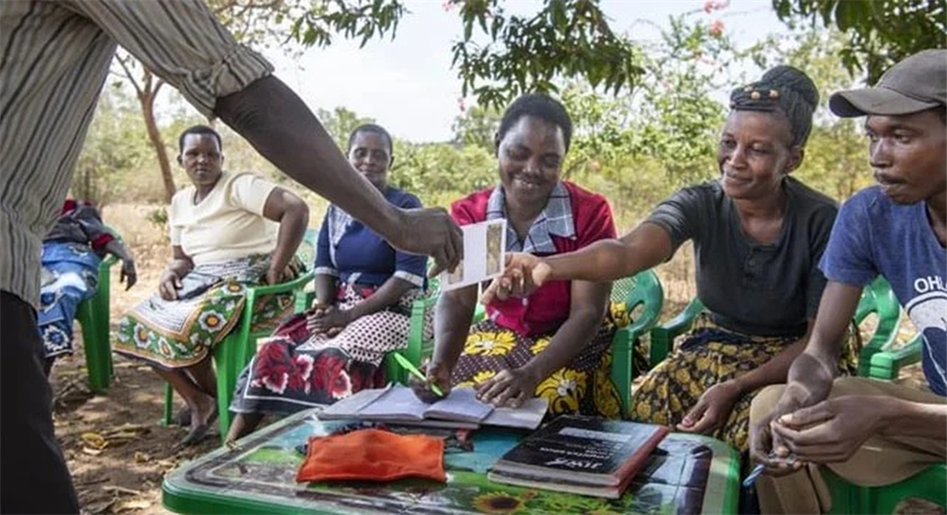
Local participation and transparent community decision-making in Naigobya. Photo: One Village at a Time.
From projects to systems: expansion through Global Fund and TASO support
UDHA’s growth accelerated when it became part of larger HIV and health-systems partnerships, including implementation linked to The AIDS Support Organisation (TASO) and Global Fund financing. This support enabled the organisation to move beyond isolated activities and invest in repeatable systems: mapping community-based organisations, training distributors and peer educators, expanding home-based counselling and testing, strengthening linkage to care and improving accountability across districts.[6][8]
| 1,087 community condom distributors trained across 20 sub-counties | 120 community-based organisations mapped and validated in 12 districts | 15,520 people reached through home-based HIV counselling and testing |
| 364 people testing HIV-positive linked to care and treatment | 300 peer educators prepared across four districts | 12 districts connected through community systems work |
The expansion changed the nature of the organisation. UDHA was no longer only delivering projects; it was helping to construct networks, standards, reporting systems and community structures that made quality services more consistent. The lesson was clear: scale is not simply doing more of the same. It is building systems that allow good work to be repeated, monitored and sustained.
What the UDHA period revealed about Prof. Waiswa’s leadership
The UDHA years revealed four qualities that would later define Prof. Waiswa’s academic and public leadership. First, he began with problems communities could recognise. Second, he built coalitions instead of personal empires. Third, he used evidence to attract resources and improve accountability. Fourth, he invested in institutions capable of continuing beyond a single project or individual.
These qualities later appeared at a much larger scale in his university leadership, research collaborations, regional health advocacy and international advisory work. UDHA was therefore not separate from his academic journey; it was one of the places where his approach to implementation science and health-systems strengthening was tested in practice.
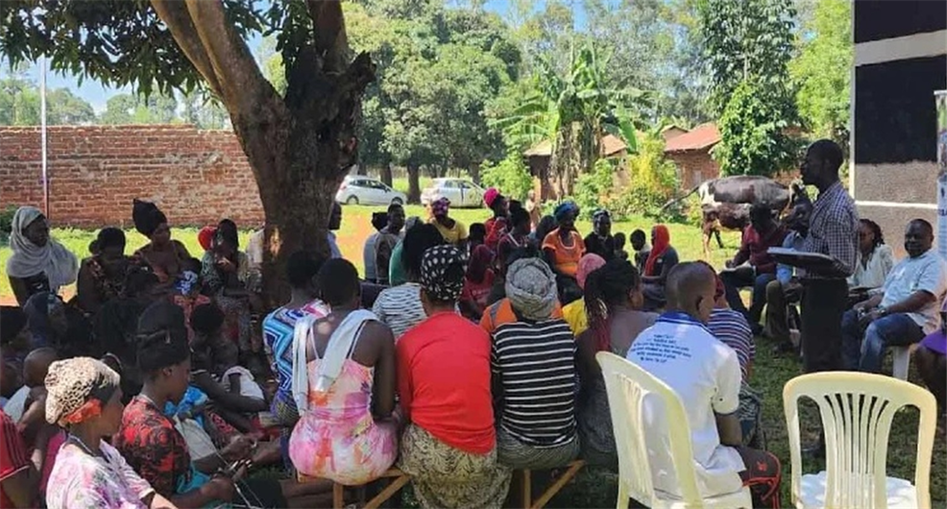
Community engagement has remained central to Prof. Waiswa’s work – from the early UDHA years to later regional and research initiatives. Photo: peterwaiswa.com.
COMONETH: evidence translated into maternal and newborn survival
Between 2017 and 2020, the Communities in which Mothers and Newborns Thrive project- COMONETH- was implemented across Luuka District. Led through the Makerere University maternal and newborn health platform, the project linked households, community health workers, health facilities and district leadership in a single demand-and-supply strategy.[9][10]
At community level, health workers conducted home visits, identified high-risk mothers and newborns, provided health education and supported referral. Pregnant women viewed locally adapted videos in Lusoga on danger signs and timely care-seeking. At facility level, health workers received mentorship and simulation-based training, while referral and obstetric surgical capacity were strengthened.[9]
| 8,283 pregnant mothers reached 6,494 newborns reached 5% → 61% preterm and low-birth-weight babies receiving kangaroo mother care 19.4% → 99.7% mothers knowing at least two newborn danger signs |
The evaluation reported meaningful improvements in the use of maternal and newborn services and in appropriate care practices. The project showed the value of joining community demand with facility readiness. Educating families without improving services is insufficient; strengthening facilities without building community trust and referral is equally incomplete. COMONETH treated the health system as a connected whole.[9]
For Prof. Waiswa, COMONETH also demonstrated how locally generated evidence can travel. The project began with the realities of Luuka, but its findings contribute to international understanding of how community–facility linked interventions can improve maternal and newborn care in rural, low-resource settings.
From UDHA to One Village at a Time
One Village at a Time (OVAAT) extended the village-centred philosophy into a broader model of rural transformation. Naigobya became the pioneer village for an approach that brings together education, health, livelihoods, environment and community governance. The initiative reflects a belief that health cannot be separated from the social and economic conditions in which families live.[11]
OVAAT has also continued international practicum engagement, including links with the Brown School at Washington University in St. Louis. This creates a bridge between local knowledge and international learning while preserving community participation and ownership as the foundation of change.[11]
Residents participate in local planning and decision-making. Photo: OVAAT. |
Busoga Health Forum: from individual projects to a regional movement
In 2020, at the height of the COVID-19 pandemic, Busoga Health Forum emerged as a platform to convene professionals, institutions and communities around the health priorities of the Busoga sub-region. Prof. Waiswa became its founding Board Chair, bringing into the Forum the same principles visible throughout his earlier work: local ownership, evidence, partnership and systems that can outlive individuals.[3][12]
Busoga Health Forum has grown beyond a professional network. It now provides a regional platform for continuing professional development, community programmes, research, advocacy, partnerships and accountability. Its work links government, academia, health workers, cultural and religious leadership, civil society, the diaspora and local communities.
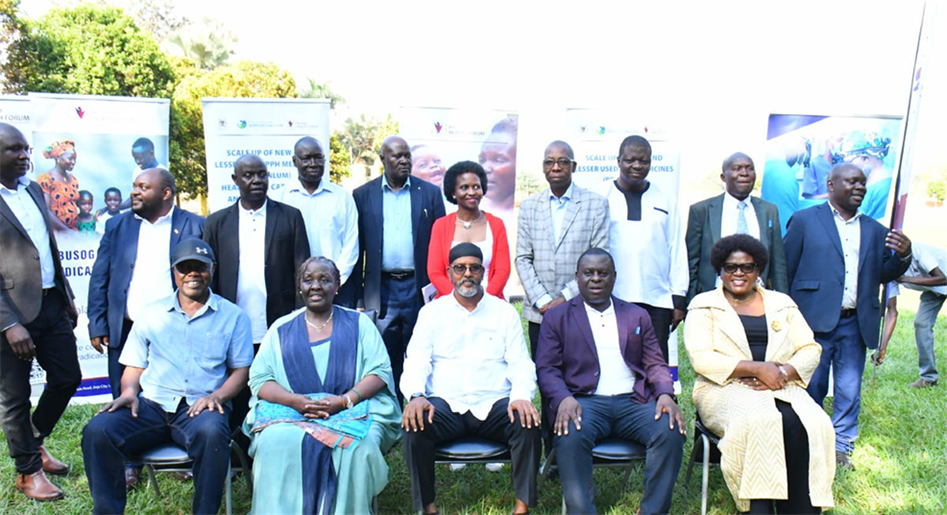
Busoga Health Forum leaders, members and partners at the 2025 Annual General Meeting. Photo: Busoga Health Forum.
| 1,000+ professional members and associates | 1,000+ trained volunteers and professionals across Busoga | 12 district-level liaison structures |
| 6,000+ health workers strengthened through CME and learning | Regional advocacy platform for health infrastructure and specialised care | Local global partnerships connecting Busoga to national and international institutions |
BHF in action: malaria elimination led from the community
The Busoga Malaria Eradication Programme became one of the clearest expressions of Prof. Waiswa’s belief that communities can organise around large public-health challenges. The programme combines community mobilisation, indoor and outdoor vector control, testing and treatment, surveillance, research and local accountability.[13]
In the Nawanyingi pilot area, the programme covered 6,955 households and 25,533 people. Monitoring recorded a major reduction in mosquito density and high household acceptance of indoor residual spraying. The model mobilised local leaders, health workers, researchers and residents around a shared objective: a malaria-free Busoga.[13]
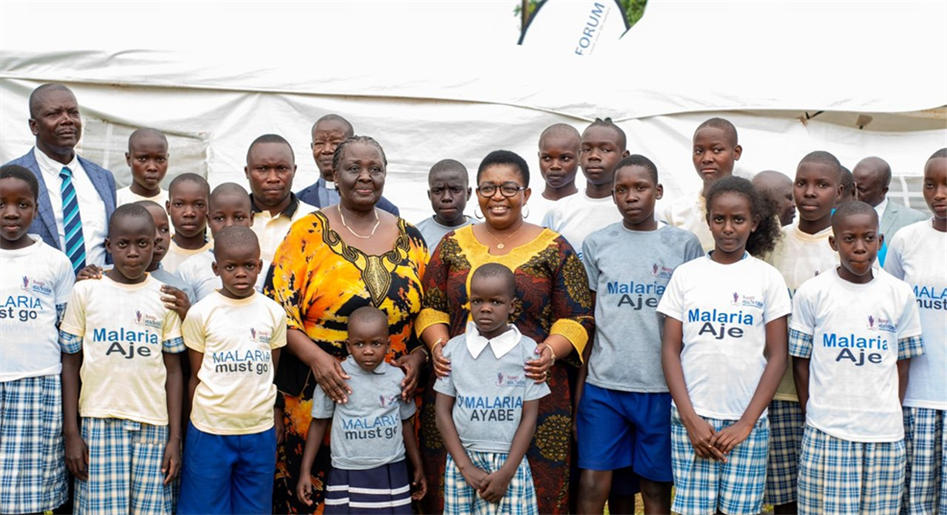
Women and young people champion community-led malaria elimination in Busoga. Photo: Busoga Health Forum.
| 6,955 households in the pilot area | 25,533 people directly covered | 88%+ reduction in mosquito density reported in programme monitoring |
| 92% household acceptance of indoor residual spraying | 1,000+ volunteers and professionals mobilised | 4 pillars mobilisation, vector control, test-and-treat, and surveillance |
At the 2026 national World Malaria Day commemoration in Iganga, Prof. Waiswa used the platform not only to celebrate community action, but to advocate for government financing, stronger health infrastructure for Busoga and formal collaboration with the Ministry of Health. This is characteristic of his leadership: field implementation is used to generate evidence, and evidence is carried into policy dialogue.
Strengthening specialised care at Jinja Regional Referral Hospital
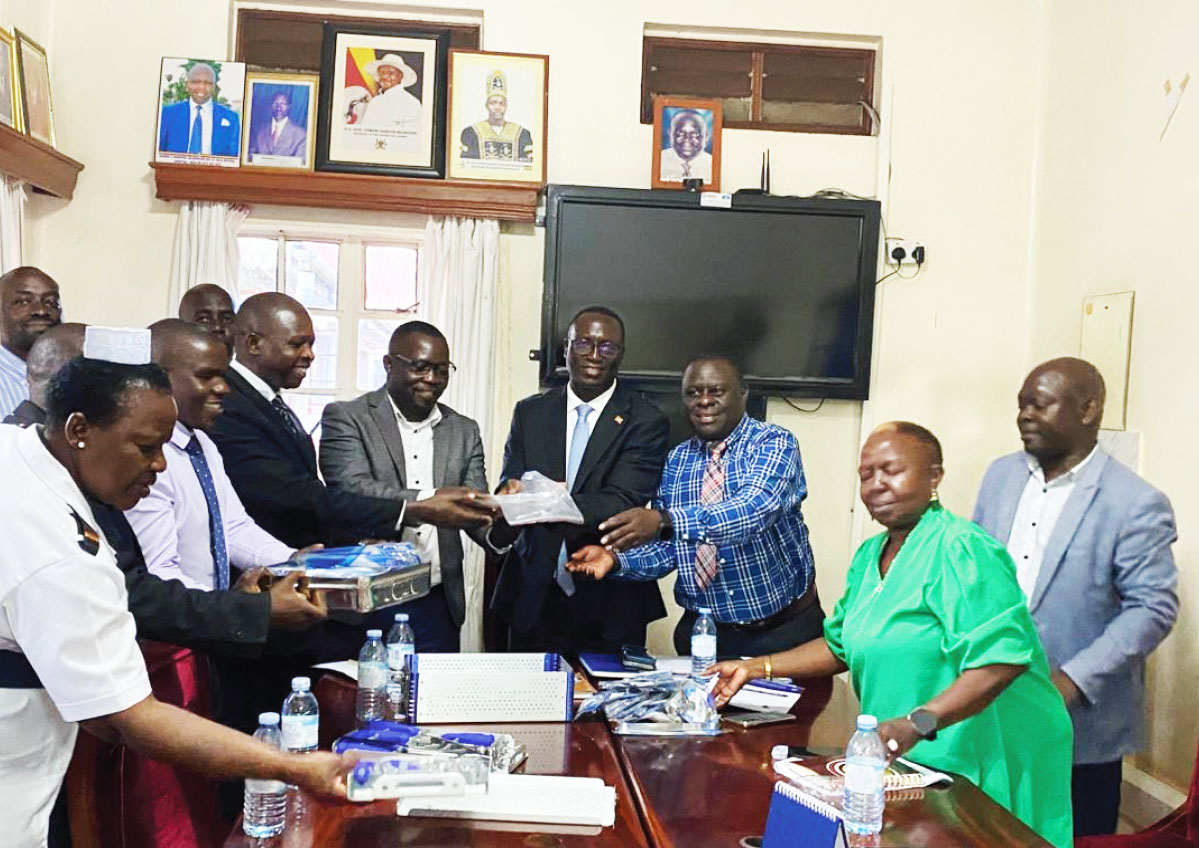
Busoga Health Forum has also translated professional networks into direct support for specialised services at Jinja Regional Referral Hospital. In March 2026, members of the Forum and public servants from Busoga handed over neurosurgical equipment valued at approximately UGX 20 million. The equipment included a craniotomy set for brain surgery and a cervical instrumentation set for spinal procedures.[14]
The donation was the first phase of a wider UGX 200 million mobilisation campaign to strengthen neurosurgery services. For families in Eastern Uganda, this work has practical meaning. It can reduce dangerous referral delays, bring life-saving surgery closer to home and strengthen Jinja Regional Referral Hospital as a centre for specialised care, training and research.
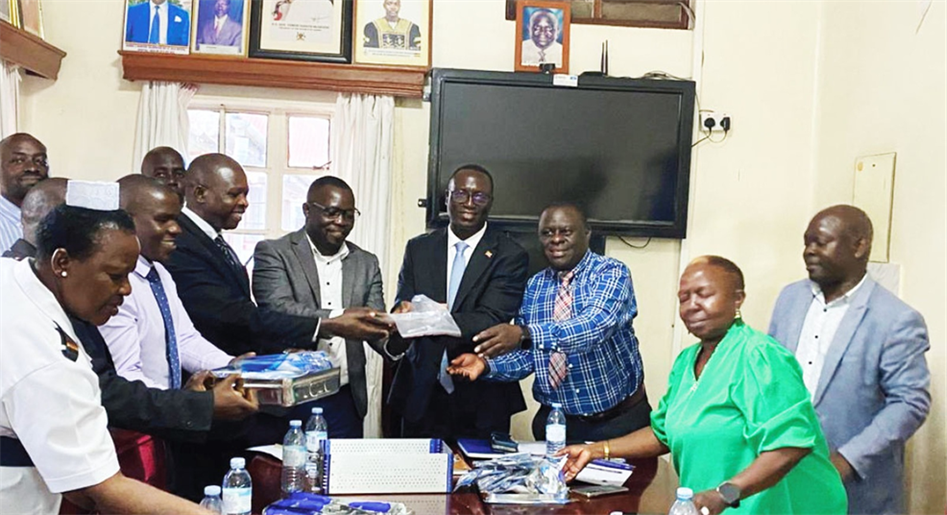
Prof. Peter Waiswa and Busoga Health Forum partners hand over neurosurgical equipment to Jinja Regional Referral Hospital in March 2026. Photo: Busoga Health Forum.
| “When we learned that Jinja Hospital urgently needed neurosurgical equipment, we mobilised ourselves.” Prof. Peter Kyobe Waiswa, Board Chair, Busoga Health Forum |
The equipment handover illustrates a broader lesson in Prof. Waiswa’s service: regional problems do not have to wait for distant solutions. Professionals, public servants, institutions and citizens can pool resources, build public pressure and create the first step toward stronger systems. Community mobilisation may begin with a donation, but its larger goal is to change what the regional health system is capable of providing.
Building a learning health region
Under Prof. Waiswa’s Board leadership, Busoga Health Forum has also invested heavily in professional learning. Its continuing medical education programme connects frontline health workers with specialists, researchers and policy experts. Through regular webinars, hybrid training, mentorship and a growing digital learning platform, the Forum is helping health workers remain current while reducing the geographic barriers that often limit access to continuing professional development.
This work connects directly to his academic philosophy. Better health systems require capable people, and capable people require continuous learning. A professor’s influence is therefore not limited to students formally enrolled at a university. It can extend to nurses, midwives, clinical officers, doctors, allied health professionals and community workers serving across an entire region.
A scholar whose research travels internationally
Alongside his community and institutional work, Prof. Waiswa has become one of Africa’s most visible health-systems and maternal-newborn health researchers. He leads the Makerere University Centre of Excellence for Maternal, Newborn and Child Health and has contributed to major research collaborations, implementation programmes and advisory platforms involving African institutions, the World Health Organization, UNICEF and other global partners.[15][16]
His scholarship covers maternal and newborn survival, stillbirths, vulnerable newborns, community health workers, quality improvement, measurement, implementation science and health policy. His publications have appeared in leading international journals, and The Lancet profiled him as a researcher “building better health systems in Africa and beyond.”[17]
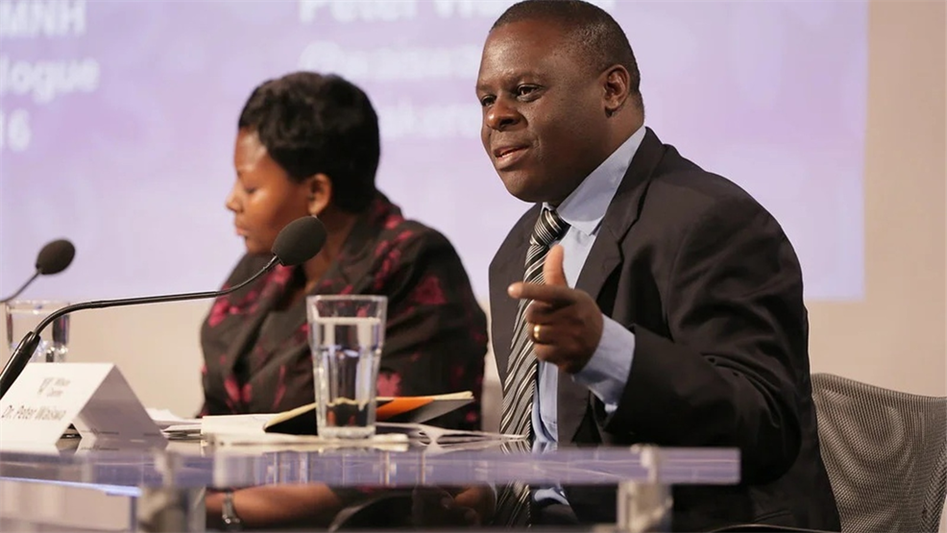
Prof. Waiswa contributing to an international health-policy and research forum. Photo: peterwaiswa.com.
The international reach of his work is significant because it is not detached from place. Questions generated in Naigobya, Iganga, Luuka and the wider Busoga region have informed research with global relevance. At the same time, international networks have brought knowledge, partnerships and visibility back to Uganda. His career demonstrates that local relevance and global excellence are not opposites; each can strengthen the other.
A professor who has built other people
Academic promotion is also a judgement about mentorship. Prof. Waiswa has supervised and supported students, early-career researchers, health professionals and programme leaders who now contribute to universities, government, research institutions and community organisations. His influence is multiplied through the people he has helped to develop.
He has also invested in platforms rather than depending on personal visibility alone: UDHA, COMONETH, OVAAT, the Makerere maternal and newborn health centre, research networks and Busoga Health Forum. Each platform brings different people into the work and creates the possibility that service will continue even when one individual steps back.
Why the promotion was due
The promotion was due because the record was already professorial in every major dimension. His research demonstrated sustained productivity and international influence. His implementation work showed an ability to move from evidence to programme design and scale. His teaching and mentorship developed others. His leadership built institutions. His public service ensured that scholarship remained accountable to society.
It was also due because Prof. Waiswa has helped elevate implementation science and health-systems research. In many low-resource settings, the central problem is not that solutions are unknown; it is that proven solutions are not delivered consistently, equitably or at sufficient scale. His career has focused on that gap – on the difficult work of making systems function for mothers, newborns, children and communities.
The title of Full Professor therefore did not create his influence. It formally recognised an influence already evident in villages, health facilities, district systems, academic institutions, African research networks and global policy spaces.
What this milestone means
For Naigobya and Luuka District, the promotion is proof that a rural beginning does not determine the limits of a child’s future. The first blackboard can become the beginning of a journey into medicine, public health, research and global leadership.
For Busoga, it is a source of pride and responsibility. The region has produced a scholar whose work is internationally respected, but whose service remains visible at home – in community health programmes, malaria elimination, professional education, advocacy and support to regional hospitals.
For Makerere University and Uganda, the promotion affirms the value of scholarship that combines academic excellence with public purpose. It shows why universities must support researchers who build institutions, mentor others and respond to national priorities.
For Africa, Prof. Waiswa’s journey represents African-led global health. African researchers must not participate only as data collectors or local partners in questions defined elsewhere. They must lead the framing of problems, the design of interventions, the interpretation of evidence and the institutions that carry the work forward.
For young professionals, his life offers a demanding but hopeful lesson: growth is cumulative. It is built through disciplined education, consistent service, courage to begin small, willingness to collaborate and patience to build systems that may take years to mature.
| The true measure of professional success is not only what we achieve at work, but what changes in society because we chose to serve. A fitting summary of Prof. Waiswa’s journey beyond the workspace |
The journey continues
Prof. Peter Kyobe Waiswa’s promotion to Full Professor is a moment for celebration, but it is not the end of the work. Maternal and newborn deaths remain unacceptably high. Malaria continues to burden families and economies. Regional hospitals require stronger specialised services. Health workers need continuous learning. Young researchers need mentorship. Communities need institutions they can trust.
From UDHA’s early community programmes to COMONETH, OVAAT and Busoga Health Forum, his growth has followed a consistent direction: begin with the problem people live with, build coalitions, use evidence to move resources and policy, and create systems that can endure.
The boy who first encountered a blackboard in Naigobya now helps shape health-systems thinking across the world. His promotion honours how far he has travelled. More importantly, it enlarges the platform from which he – and the many people and institutions built around this work – can continue to serve.
Sources and further reading
1. Makerere University News. “Makerere University Promotes Prof. Peter Waiswa to Full Professor.” 13 July 2026. Open source
2. Peter Waiswa official website. “Education & Training.” Open source
3. Peter Waiswa official website. “Community Service.” Open source
4. Uganda Development and Health Associates. Annual Report 2014. BHF/UDHA archive.
5. Uganda Development and Health Associates. Annual Report 2015. BHF/UDHA archive.
6. Uganda Development and Health Associates. Annual Report 2016. BHF/UDHA archive.
7. GlobeMed at Washington University in St. Louis. “Our Partner: Uganda Development and Health Associates.” Open source
8. PATH. Global Fund Prospective Country Evaluation, Uganda; documentation of TASO partnership with UDHA. Open source
9. Wafula ST et al. “Effect of community–facility linked interventions on maternal health service utilization and newborn care in rural low-resource settings in Eastern Uganda.” BMC Pregnancy and Childbirth. 2024;24:692. Open source
10. Makerere University School of Public Health. “COMONETH: Communities in which Mothers and Newborns Thrive.” Open source
11. One Village at a Time Uganda. Official website. Open source
12. Busoga Health Forum. Annual Report 2025 and AGM records. BHF archive. Open source
13. Busoga Health Forum. Busoga Malaria Eradication Programme pilot and World Malaria Day reports, 2025–2026. BHF archive. Open source
14. Busoga Health Forum. “Busoga Health Forum Hands Over Specialized Neurosurgical Equipment to Strengthen Specialized Care in Eastern Uganda.” 16 March 2026. Open source
15. Makerere University News. “Prof. Waiswa elected Fellow of the African Academy of Sciences.” 21 November 2025. Open source
16. Peter Waiswa official website. “Leadership & Advisory” and “Scientific Activity.” Open source
17. Dawson Q. “Peter Waiswa: building better health systems in Africa and beyond.” The Lancet. 2022;400(10357):989. Open source
Photo credits and publication note
| Photographs used in this publication draft are credited to Makerere University News, peterwaiswa.com, One Village at a Time and Busoga Health Forum. The COMONETH map is reproduced from the open-access BMC Pregnancy and Childbirth article by Wafula and colleagues. Before web publication, retain all credits and confirm any organisational permissions required for archival or partner-owned photographs. The Naigobya images included here show current community and practicum engagement; original high-resolution archival UDHA/GlobeMed photographs may be substituted where available. |